|
Petama Topic September 'The Desire for Knowledge- 3' from Hazrat Inayat Khan: 'The Purpose of Life' |
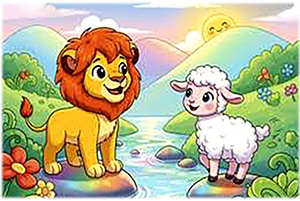
By the study of this we will find that there are five different aspects which constitute our physical body. The human beings of the Inner Life, for convenience, call them earth, water, fire, air, ether. But these must not be compared with the scientific terms; it is only for the convenience of Inner Life. Then we will see the different senses, the organs of the senses: each sense represents one of these elements. And coming to the natural tendencies and needs of life, every action we do has a relation to one of these five elements. This study of the mechanism will make a person understand that something which he always called himself is nothing but a mechanism, a mechanism made of five elements, the elements which are borrowed from the outer world. And we will find that our mind, which experiences through all organs of the senses, still remains aloof as a spectator who conceives and perceives the outside world through the mediumship of this mechanism which we call our body. This knowledge will waken a deep thinker to the fact that he is not his body; although, consciously or unconsciously, there is perhaps one among a million persons who clearly realizes, ‘My body is my instrument; I am not my body.’ The one who has come to realize, ‘My body is my instrument,’ is the controller of this prison; he is the engineer of this machinery. And then there comes the next stage of knowing ourselves, and that is to explore what we calls the mind. By a minute study of the mind we will find that the different qualities such as reason, memory, thought, feeling, and the ego, all these five things constitute our mind. We will find that there is a surface to this and there is a depth to it. Its depth is the heart; its surface is the mind. Each quality of mind represents one of these five elements. This again takes us to the thought that even the mind, which is above the physical body, is a mechanism. And the more we are acquainted with the mechanism, the more we are able to manage it to its best advantage; and it is the ignorance of the secret of this mechanism that keeps a human being unaware of his own domain. This knowledge makes us think, ‘I am neither my body nor am I my mind; I am the engineer who has these two possessions, these two machineries, to work with to the best advantage of life.’ Then we begin to ask, ‘What am I, then?’ For to a certain degree even the mind is a mechanism which is borrowed from the outer sphere, as the body is a mechanism which has been borrowed from the physical plane, which has been gathered together and constructed. Therefore, neither mind nor body is the self. We think, ‘It is myself’, only because we cannot see ourselves. And so we say of everything we see, ‘This is myself.’ The self becomes acquainted with everything but itself. So that mind which the self has used, has become a kind of cover upon the light which fulfills the purpose of life. When this is intellectually realized, although it does not fulfil the purpose it begins our journey in the search of truth. This must be realized by the process of meditation, the process by which the self can separate itself from body and afterwards from mind. For the self, deluded all through life, is not ready to understand, is not prepared to understand truth. It rejects truth; it fights truth. It is like the story, told in my Divan: A lion once saw a lion cub wandering through the wilderness with the sheep. The lion was very surprised. Instead of running after the sheep, he ran after this lion cub. And the little lion was trembling and very frightened. The father lion said, ‘Come, my son, with me; you are a lion.’ ‘No,’ said the cub. ‘I tremble, I tremble, I am afraid of you. You are different from my playmates. I want to run with them, play with them; I want to be with them.’ ‘Come, my son, with me,’ said the lion, ‘you are a little lion.’ ‘No,’ said the cub, ‘no, I am not a lion. You are a lion; I am afraid of you.’ The lion said, ‘I will not let you go; you must come with me.’ The lion took him to the shore of the lake and said, ‘Now look in it and see with your own eyes if you are a lion or if you are a sheep.’ This explains what initiation means and what the initiator teaches to his disciple as meditation. Once the image is reflected in the lake of the heart, self-knowledge comes by itself. How shall I thank Thee, my King, for Thy bountiful gifts? Every gift Thou givest me, my generous Lord, is invaluable. A tongue of flame arose from the spark in my heart by Thy gentle blowing. Thou dost hear my softest whisper; Thou hast taught me Thine own tongue and to read the character written by Thy pen.
Gayan - Ragas (these E-book are free of all charge - use their treasures well!) |
|